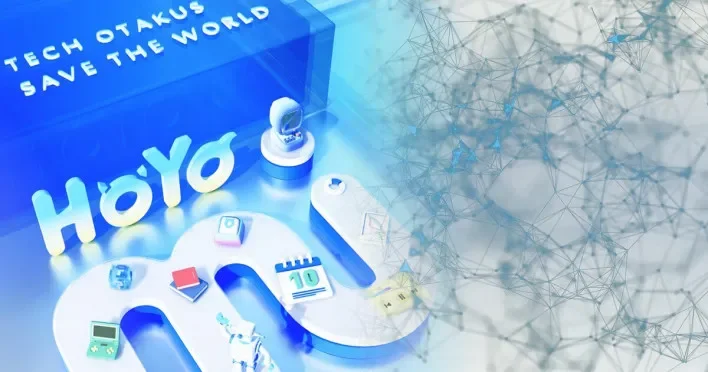
Gaming giant HoYoverse is signaling a significant pivot toward self-sufficiency in artificial intelligence, pledging up to $14.6 billion over the next three years. The move centers on developing an "in-house AI ecosystem," a departure from solely relying on outside models. This grand gesture aims to fundamentally reshape game creation, injecting AI into everything from character interactions to automated content generation.
The core of this strategy appears to be building a self-contained AI pipeline, encompassing everything from GPU clusters and training systems to the very architecture that will deploy these tools. This "full-stack" approach suggests a desire to control and customize AI development, rather than merely adapting existing technologies. The company articulates this through the principle of 'AI for AI, Model with Model,' hinting at a future where AI itself helps refine and optimize the development process, even generating GPU kernel code.
Read More: Planet Zoo 2 sequel confirmed, more news coming in 2026
HoYoverse executives, including co-founder Liu Wei, have framed this investment as central to their long-term vision. The goal is to foster "AI-powered NPCs" and create dynamic, real-time game experiences that adapt to individual player behavior. This implies a move toward hyper-personalization, where game worlds and their inhabitants will react and evolve based on specific player actions, a concept explored in upcoming titles like the life simulation game Petit Planet.
This strategic recalibration places HoYoverse alongside other industry players, such as Krafton, which has also signaled an "AI-first company" ambition. While the company assures that human creativity will remain paramount for core narrative elements, AI's role is expected to expand significantly in areas like character development, animation, and the general game development pipeline. This expansion extends to creating more immersive virtual worlds through AI-driven real-time character interactions and dialogue.
Read More: L3Harris Gets $47 Million Contract, Questions About Purpose
The scale of the investment, reported variously as up to $14.6 billion and $16 billion (approximately 22.2 trillion South Korean Won), underscores the perceived importance of AI. Previous investments, like $69.7 million for a new GPU cluster and an additional $20.8 million for workforce retention through AI tools, appear to be early steps in this larger endeavor.
This push toward internal AI development marks a substantial shift, moving beyond the simpler task of fine-tuning pre-existing AI models. It signifies an ambition to not only utilize AI but to fundamentally engineer it from the ground up for its specific needs.