A renewed push by former US President Donald Trump to expand the 'Abraham Accords', a framework for normalizing relations between Israel and several Arab nations, has placed Pakistan in a complex strategic and diplomatic bind. Trump has explicitly linked efforts to achieve peace with Iran to the broader adoption of these accords by more Muslim-majority countries. This move complicates existing negotiations and highlights the deep-seated regional tensions surrounding the Palestinian issue.
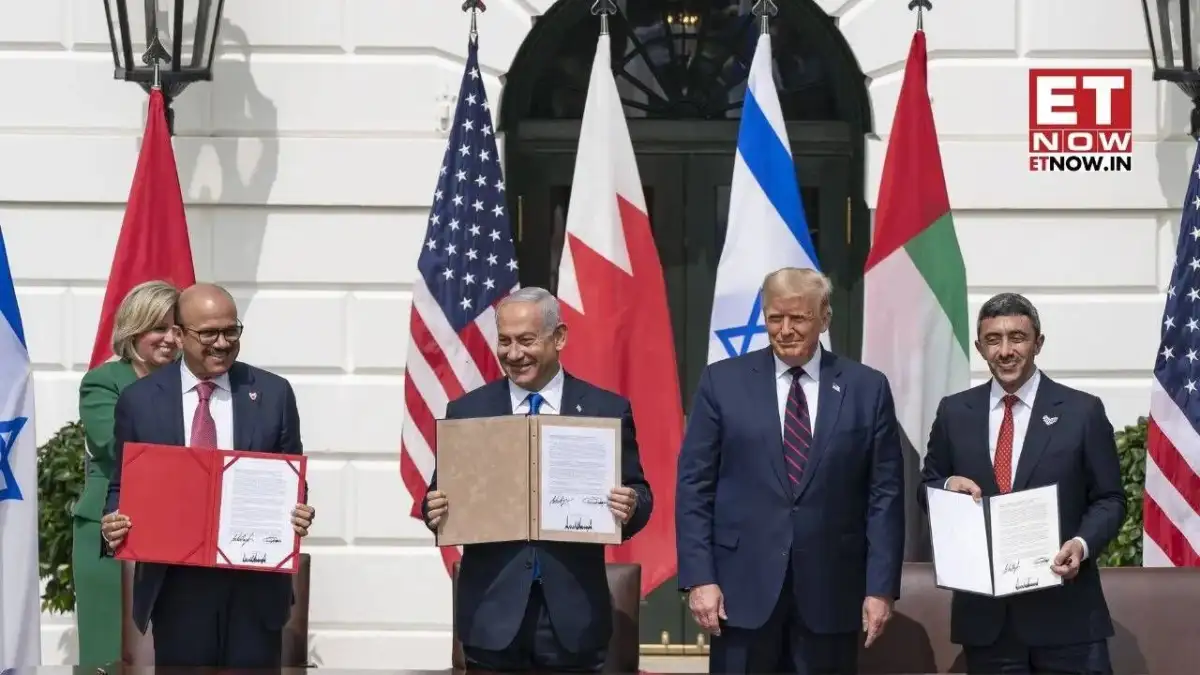
The core of Trump's proposition involves encouraging countries, including Pakistan, Saudi Arabia, Turkey, and Qatar, to formally recognize Israel under the Abraham Accords umbrella. This potential expansion is not isolated; it is now explicitly tied to progress on a US-Iran peace deal. This linkage transforms Iran talks into a wider strategic maneuver, potentially leveraging normalization with Israel as a condition or incentive for Iran-related diplomacy.
Read More: Vellore TVK Functionary Removed After Bribery Claims by Brick Kiln Owners
Pakistan's Stance: Palestinian Statehood as a Precondition
Pakistan has, in response, firmly rejected this overture, reiterating its long-standing position that any normalization with Israel hinges on the establishment of a Palestinian state. This stance is shared by Saudi Arabia, which also insists on Palestinian statehood before considering normalizing ties with Israel. Pakistan's diplomatic posture is further influenced by its strong ties with other West Asian nations that continue to champion Palestinian statehood, making any deviation from this principle politically untenable.

The Abraham Accords: A Shifting Regional Landscape
The Abraham Accords, initially brokered in 2020, marked a significant departure from decades of Arab policy by normalizing relations between Israel and a handful of Arab states, including the UAE and Bahrain. These agreements paved the way for diplomatic ties, embassies, expanded trade, and cooperation in areas such as technology, tourism, and security. Prior to these accords, only Egypt and Jordan were Muslim-majority nations with formal recognition of Israel. The recent initiation of flights between Israel and the UAE underscores the practical implications of these agreements.
Read More: US Author and Politician's Son Charged with Helping China Get Data
Internal Pressures and Regional Repercussions
The ongoing conflict in Gaza has heightened sensitivities around recognizing Israel, creating an intensely delicate environment for any such discussions within Pakistan. Furthermore, Trump's linkage of the Abraham Accords with Iran peace negotiations creates a precarious situation for Pakistan-US relations, potentially putting them in a difficult position given Islamabad's role in mediating US-Iran peace talks. This strategic entanglement presents Pakistan with a dilemma, forcing it to weigh its regional alliances and historical commitments against the geopolitical pressures emanating from Washington. The potential for an 'all-party conference' in Pakistan to deliberate on the Middle East situation, particularly the Abraham Accords, signals the gravity of the internal debate and the range of options being considered.
Read More: Drew Barrymore opposes Spencer Pratt for LA Mayor