


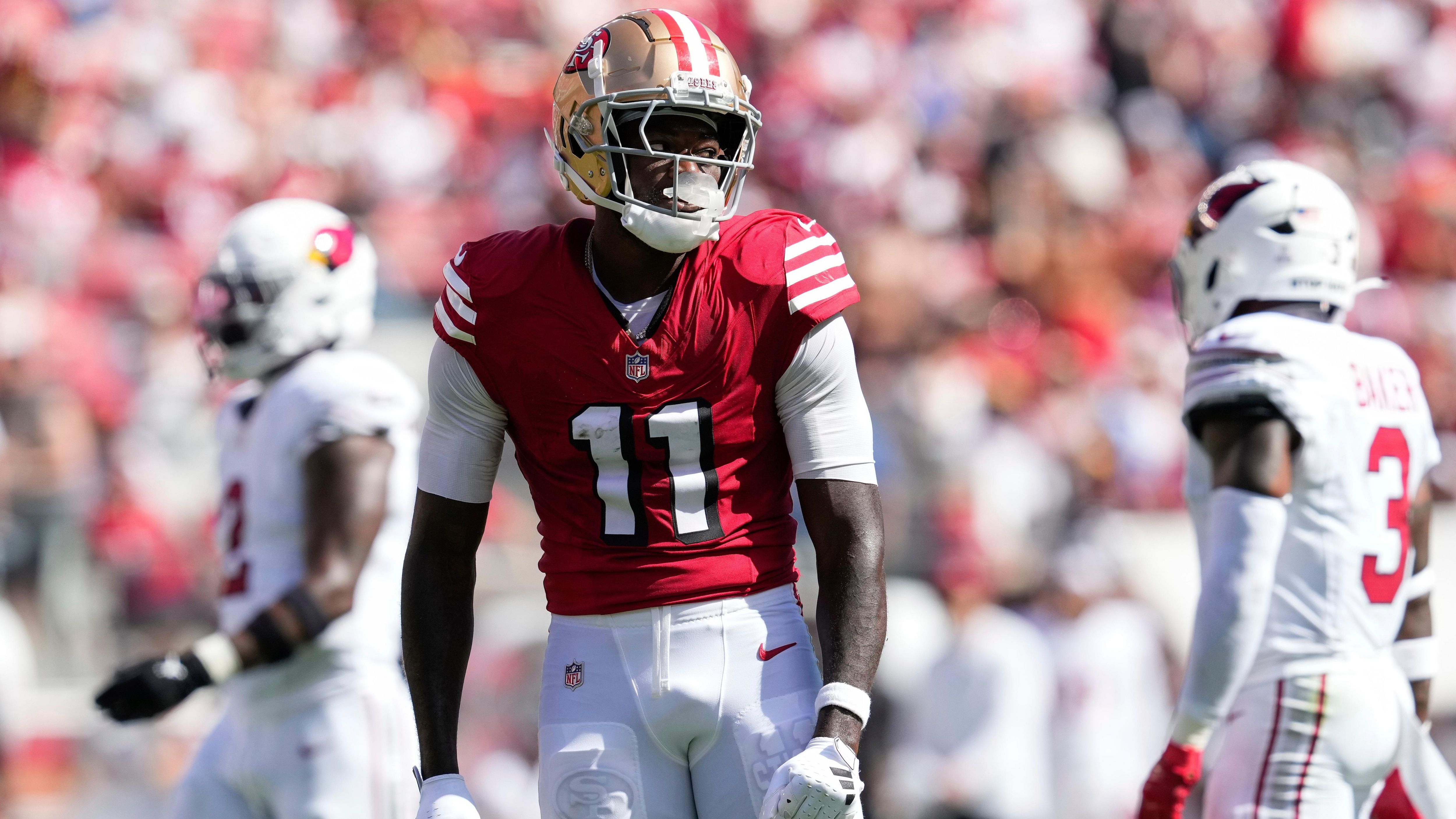
Internal friction within the San Francisco 49ers regarding wide receiver Brandon Aiyuk continues to draw scrutiny as the team moves into its post-draft phase. Despite the club’s active roster restructuring—including recent defensive additions—the relationship between the organization and the receiver remains an unresolved point of contention.

Industry observers suggest that the current impasse requires a clear behavioral shift from the player to stabilize his standing within the team's hierarchy.
Operational Context
The discourse surrounding Aiyuk occurs within a wider atmosphere of team transition. Following the 2026 NFL Draft, the organization has shifted its focus toward securing long-term stability across its core personnel.
The team recently facilitated a transaction with the Dallas Cowboys, acquiring linebacker Winters for a fifth-round draft choice.
Offseason activities and organized team activities (OTAs) are now the primary focus for coaching staffs across the league.
Contract negotiations for marquee players remain a common, if disruptive, element of the current professional football landscape.
Perspective on Player-Team Dynamics
The current standoff is not unique in a professional climate where financial leverage and individual market value frequently collide with team-wide salary structures. While external commentators have offered prescriptive advice on how Aiyuk might "fix" the relationship, these suggestions often overlook the systemic nature of NFL labor relations.
Read More: FIFA World Cup 2026 Revenue Reaches $15 Billion With New Ticket Prices
Whether the path forward involves a reconciliatory approach or a permanent separation remains a subject of speculation among league insiders. As of May 23, 2026, there has been no formal announcement of a resolution.
Reflective Note: The professional sports model often creates a binary choice between institutional loyalty and individual fiscal optimization. In this instance, the tension between the 49ers and Aiyuk serves as a recurring indicator of the inherent instability found in modern franchise management, where high-performance expectations frequently outpace the capacity for amicable contract arbitration.




/2026/04/27/69eefa6094699567446928.jpg)