BEIJING — In the escalating global contest for artificial intelligence supremacy, a notable perspective has emerged questioning China's capacity to foster the kind of disruptive, individualistic innovators seen in the West, exemplified by figures like Elon Musk. This sentiment, voiced by an unnamed AI expert, points to fundamental structural and cultural aspects within China as potential impediments to the spontaneous generation of such personalities.
The core argument suggests that China's societal emphasis on collectivism and state-directed development, while effective in certain large-scale initiatives, may inherently suppress the individualistic, boundary-pushing ethos often associated with Silicon Valley-style technological breakthroughs. This perspective implies that while China can achieve immense feats through coordinated effort, the creation of a lone genius capable of single-handedly revolutionizing industries might be an elusive prospect under current conditions.
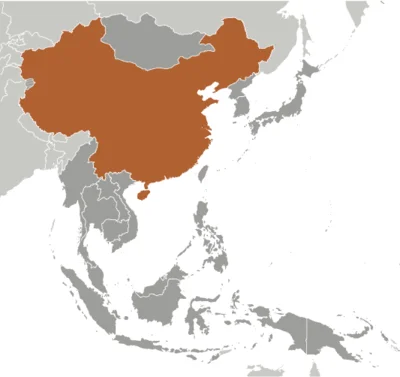
The AI expert's observations, while not elaborated with specific policy details, touch upon the perceived dichotomy between top-down, structured advancement and bottom-up, emergent innovation. This contrast is frequently discussed in analyses of China's technological trajectory, particularly as it vies with the United States for leadership in fields like artificial intelligence.
Read More: Chrome mimeHandler API lets extensions handle file types

Contextualizing the AI Landscape
China has demonstrated significant progress in AI research and application, with substantial government investment and a vast pool of talent. Data from The World Factbook highlights China's immense population and growing economy, underpinning its ambitions in technological sectors. The nation boasts a robust infrastructure, with advanced telecommunications and a rapidly expanding commercial space sector, underscoring its capacity for complex, large-scale projects.
However, the aforementioned expert's comments introduce a nuanced critique, suggesting that the very systems that enable China's industrial might might also create a bottleneck for a particular brand of radical, independent innovation. This challenges the assumption that sheer investment and talent alone guarantee parity in all aspects of technological advancement, especially concerning the emergence of singular, transformative figures.
The global AI race involves multifaceted strategies, with both the US and China employing different approaches. While the US often relies on a decentralized ecosystem of startups, venture capital, and academic research, China's model frequently involves greater state coordination and industrial policy. The implication is that the distinct cultural and political landscapes in each nation may shape the nature of innovation, not just its pace or scale.
Read More: China Ethnic Unity Law starts July 1 2026 for all citizens
This commentary arrives as geopolitical tensions and technological competition between China and the US continue to define the global landscape. The ability of nations to produce diverse forms of innovation, from incremental improvements to paradigm-shifting leaps, remains a critical factor in this ongoing dynamic.