The 2026 World Cup, currently unfolding across the United States, Canada, and Mexico, has solidified its status as a massive financial machine, with projected revenues nearing $13 billion to $15 billion. The governing body has shifted to a high-revenue extraction model through expanded tournament logistics, record-breaking broadcast agreements across 175 territories, and the debut of dynamic pricing systems for match tickets.

While FIFA presents these figures as evidence of growth and increased payouts—guaranteeing participating associations a minimum of $10.5 million each—the internal financial reality is asymmetric. Operational budgets for the tournament have seen reductions, with reports of $100 million in cuts affecting safety, logistics, and accessibility staff.
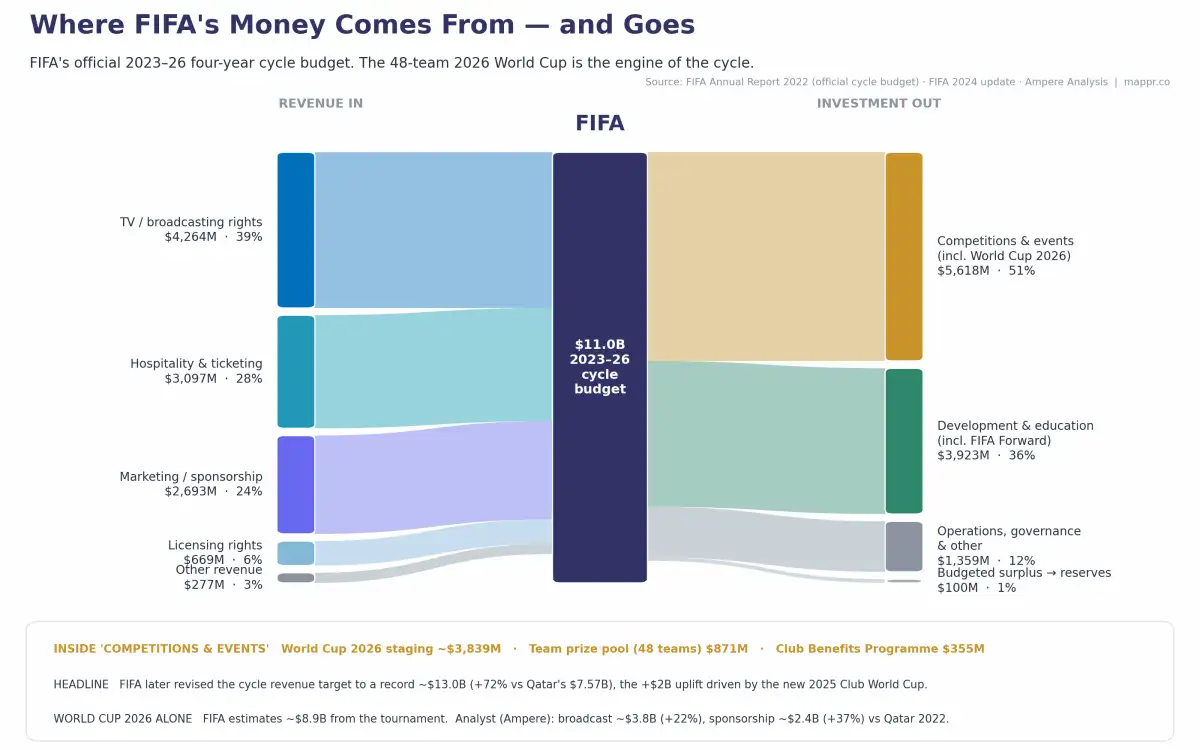
Revenue Mechanisms and Market Pressures
Dynamic Pricing: FIFA has implemented real-time price adjustments for tickets, claiming this reflects standard market value. Critics argue this model forces an excessive financial burden on the audience.
Resale Fees: The governing body now secures a 15% margin on both ends of tickets traded on its proprietary platforms, effectively capturing revenue from secondary markets.
Tax Liability: FIFA secured exemptions for national associations in Canada and Mexico, and negotiated heavily to mitigate U.S. federal tax liabilities, insulating their margins from local fiscal policies.
Budgetary Friction: While FIFA projects record earnings, tensions persist with host cities. Of the original 11 U.S. host sites, only a minority remain committed to the full, original scope of the planned 39-day festival.
The Institutional Strategy
The business model for this cycle marks a departure from previous tournaments. By utilizing existing infrastructure—such as established American football stadiums—rather than financing new construction, FIFA has shifted the capital expenditure risk onto the host nations and cities.
Read More: England World Cup Match: Pubs Open Until 5 AM Monday
| Category | Financial Shift |
|---|---|
| Prize Money | $727M (50% increase from 2022) |
| Total Revenue | Est. $13B - $15B |
| Operating Model | High-volume (48 teams, 104 matches) |
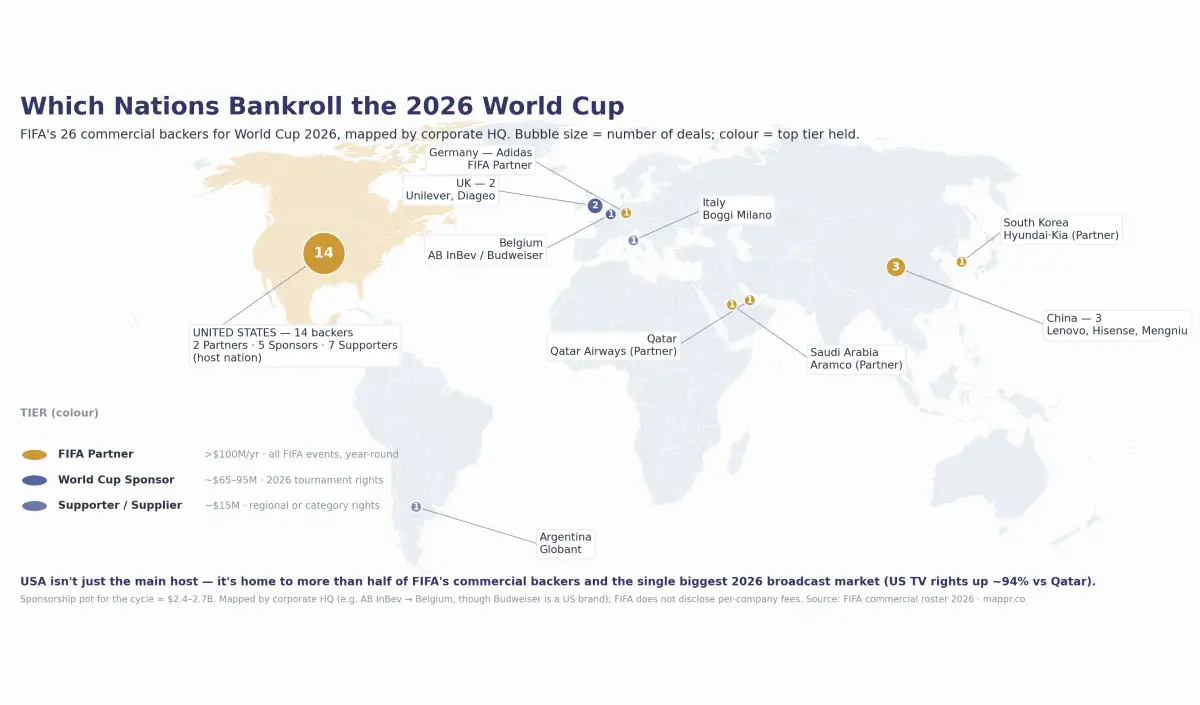
| Primary Revenue | Broadcast, Sponsorship, Dynamic Ticketing |
Contextual Undercurrents
The financial restructuring aligns with the consolidation of power under current leadership. With FIFA statutes altered to enable an unopposed third term for president Gianni Infantino, the distribution of record payouts to member associations is perceived by some analysts as a strategic solidification of internal political support.

The tournament—billed by Infantino as the equivalent of "104 Super Bowls"—remains a site of tension between the sport's commercial expansion and the logistical realities of its local hosts. While ticket demand remains high, the disparity between FIFA’s record-breaking intake and the strained operational capacities on the ground underscores a shifting hierarchy in global sporting governance.
Keywords: FIFA World Cup 2026, Revenue Models, Dynamic Pricing