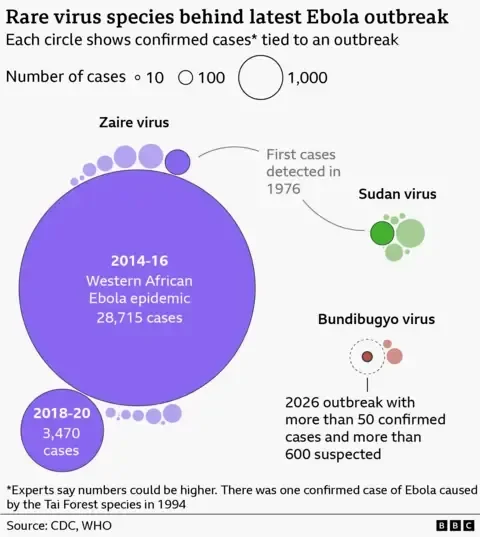
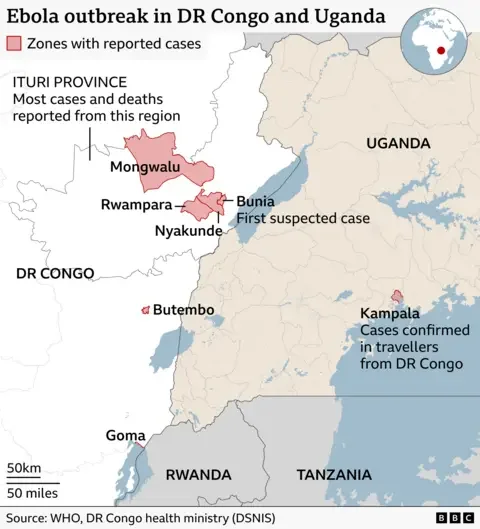
The World Health Organization (WHO) confirmed that an effective vaccine for the current Bundibugyo strain of Ebola in the Democratic Republic of Congo and Uganda may remain unavailable for up to nine months. As of today, 22/05/2026, health authorities report 600 suspected cases and 139 suspected deaths. While the WHO classified the situation as a 'public health emergency of international concern' on 18/05/2026, officials maintain the outbreak has not reached pandemic proportions despite high regional transmission risks.
Current Status and Containment
The biological hurdle centers on the specific nature of the Bundibugyo virus, for which no targeted medical countermeasures currently exist.
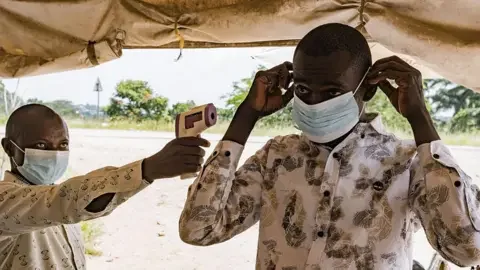
Clinical Gap: Standard protocols are limited to supportive care; mortality risks remain high as case detection lags behind the virus’s actual spread.
Logistics: The nine-month projection for a specialized vaccine highlights a persistent structural divide between emergent health threats and industrial manufacturing cycles.
Regional Impact: The WHO assessment suggests the threat is localized to the Congo and Uganda borders, yet remains volatile due to movement in the region.
| Metric | Status |
|---|---|
| Confirmed Strain | Bundibugyo |
| Suspected Cases | 600 |
| Suspected Deaths | 139 |
| Vaccine Timeline | ~9 Months |
Contextualizing the Response
The inability to rapidly deploy a vaccine has reignited long-standing Public Health critiques regarding the Global Health response hierarchy. While high-income regions often enjoy prioritized R&D pipelines for endemic or localized pathogens, outbreaks in Central Africa frequently encounter systemic delays in Vaccine Development.
Read More: India IVF Costs And Social Barriers Limit Access In April 2026
"The numbers were expected to rise given the time taken to detect the virus," noted the WHO regarding the difficulty of identifying early-stage cases in affected areas.
Residents, such as Araali Bagamba of Bunia, describe a climate of acute awareness concerning the lethality of the virus, even as the international medical apparatus moves through iterative, slow-burn verification processes. For the immediate future, containment relies solely on monitoring, isolation, and supportive hydration rather than preventative biological intervention.