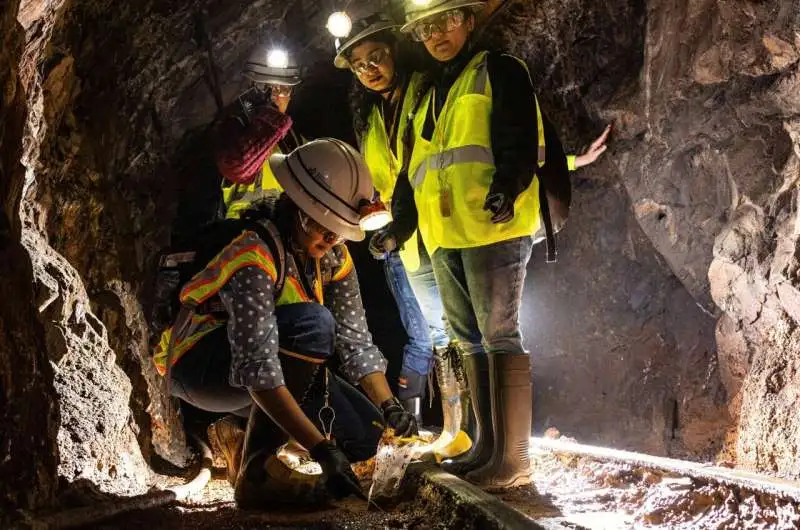
A recent discovery in an underground laboratory points to a novel biological approach for tackling carbon dioxide emissions. Researchers are examining microbes, found thriving in extreme deep-earth conditions, for their potential to "scrub" CO₂.
The core idea is to leverage enzymes produced by these microorganisms to capture carbon dioxide. This would involve exposing emissions from sources like coal-fired power plants to a solution rich in these enzymes.
"The hot water and rocks deep within Earth are teeming with undiscovered life," noted a scientific editor familiar with the research.
Dr. Tanvi Govil, a leading biologist in this field, is spearheading an initiative to create a comprehensive collection of these specialized microbes. The aim is to identify organisms with superior carbon-capture capabilities.
Next Steps and Broader Context
The immediate next phase for this research involves 'pilot-scale testing' of the captured enzyme technology.
The work taps into the understanding that Earth's subsurface, often perceived as barren, harbors a diverse and previously unknown microbial ecosystem. This extreme environment has apparently fostered life forms with unique biochemical properties, now being explored for industrial applications.
Read More: Vermont Bans Paraquat Herbicide Due to Parkinson's Fears