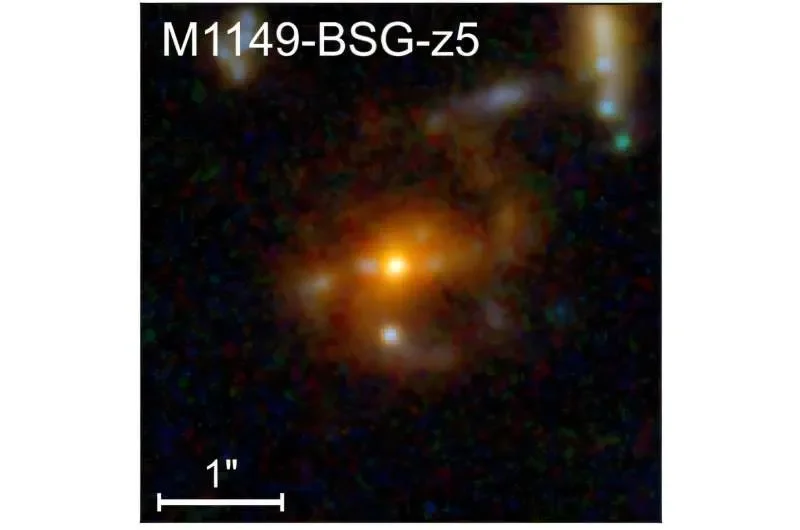
The James Webb Space Telescope (JWST) has identified a new barred spiral galaxy, designated M1149-BSG-z5, pushing the known limits for such structures in the early universe. This galaxy, observed with a redshift of 5.1, features a stellar bar approximately 14,700 light-years long, making it the most distant barred galaxy detected to date. Its properties, including an effective radius of about 8,500 light-years and spiral arms reaching 17,900 light-years, place it as larger than typical galaxies at similar redshifts and comparable to some barred galaxies observed between redshifts 2.0 and 4.0.
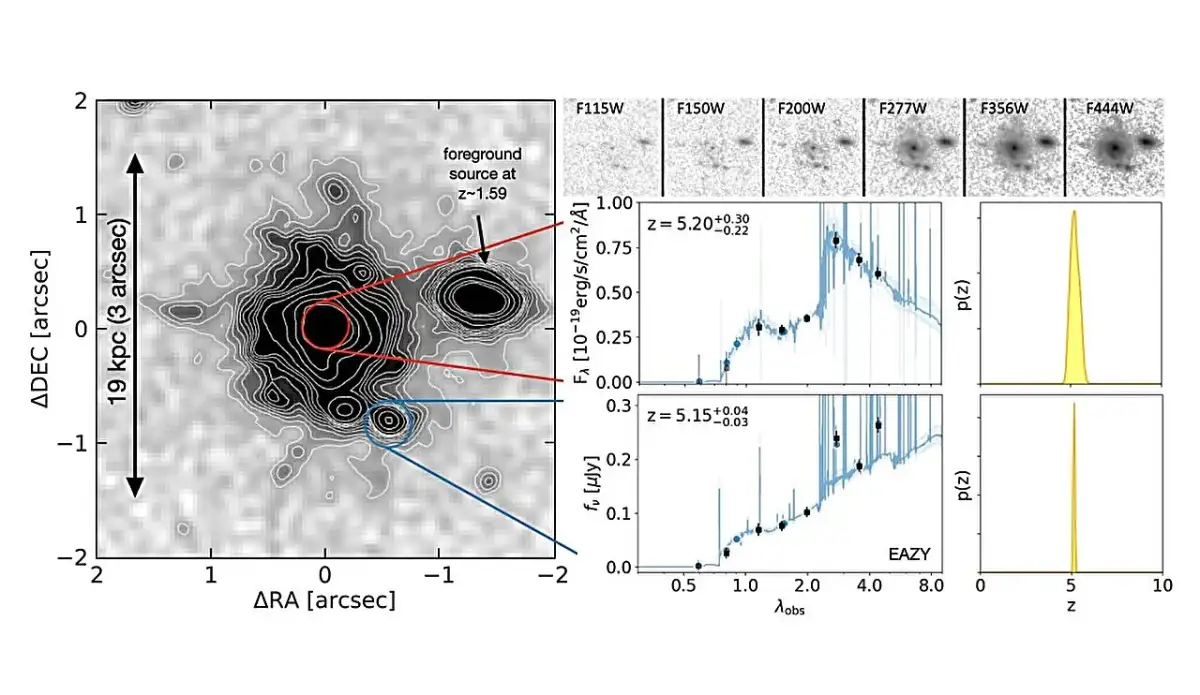
The significance lies in finding such a structured galaxy so early in cosmic history, challenging current models of galactic evolution.
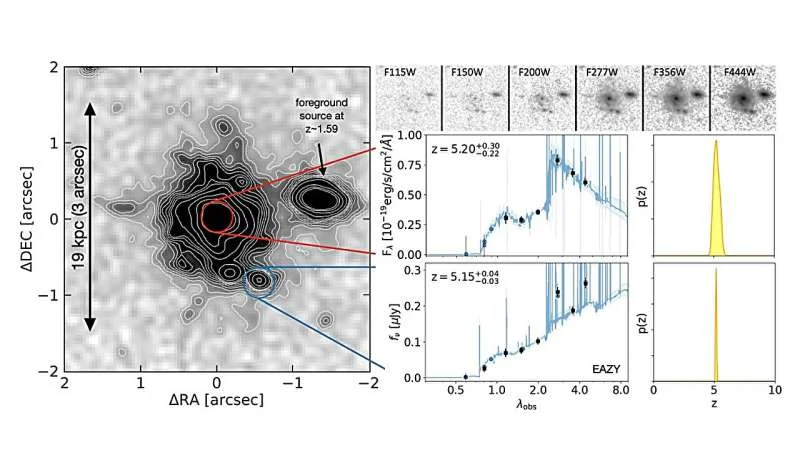
The galaxy's relatively isolated state, with the nearest neighbor roughly 69,000 light-years away, prompts further questions about the mechanisms driving bar formation. While the paper suggests interactions may play a role, the distance implies other formative processes could be at play.
Read More: US Space Force Victus Haze Mission Successfully Tests Orbital Intercepts

Contextualizing Early Galaxies
This discovery follows other notable JWST observations of ancient, large galaxies. In December 2024, astronomers identified Zhúlóng, an ultra-massive grand-design spiral galaxy with a stellar disk spanning 62,000 light-years. Zhúlóng, though distant and possessing a classical bulge, exhibited a relatively low star-formation rate of 66 solar masses per year despite ongoing star formation in its disk.
Further investigation into these early cosmic structures remains ongoing.