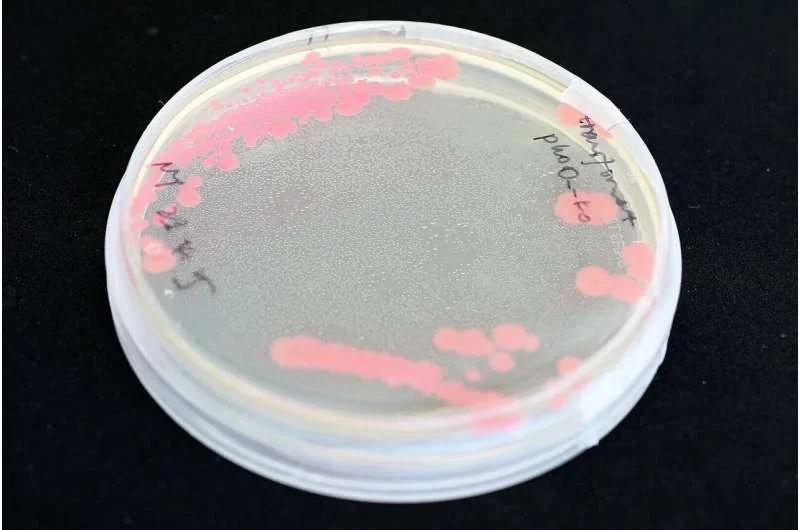
A Kiel University research initiative has revealed a method to render notoriously difficult bacteria susceptible to treatment by administering antibiotics in a specific sequence. The approach centers on what researchers term 'negative hysteresis', where a preliminary dose of a beta-lactam antibiotic alters the bacterial cell structure, making it an easier target for a follow-up aminoglycoside antibiotic. This discovery comes amid growing global concern over 'antimicrobial resistance (AMR)', a phenomenon where microbes evolve to shrug off the drugs designed to kill them. The core insight is that a carefully timed sequence of antibiotics can exploit bacterial vulnerabilities, rather than simply overwhelming them.

The work, spearheaded by Dr. Florian Buchholz and his colleagues within the Research Training Group (RTG) TransEvo at Kiel, focused on the pathogen Pseudomonas aeruginosa. This bacterium is flagged as a 'high-priority pathogen', meaning it poses a significant risk and demands new therapeutic avenues. Their findings, published in Nature Communications, demonstrate that this sequential tactic robustly sensitizes P. aeruginosa to a subsequent aminoglycoside assault. The researchers established that the beta-lactam pre-treatment increases the permeability of the bacterial cell walls, allowing the second antibiotic to penetrate more effectively.
Read More: NASCAR driver Kyle Busch dies at age 41 on May 21 2026

EVOLUTIONARY RESEARCH UNDERPINS THERAPEUTIC SHIFT
This research taps into a broader interdisciplinary effort in 'translational evolutionary research' coordinated by the Kiel Evolutionary Biology Centre (KEC). For years, the group has probed the ways Pseudomonas aeruginosa develops resistance, aiming to find ways to circumvent these adaptive mechanisms.
The principle of 'negative hysteresis' is central to their strategy. It describes a situation where a past exposure to a stimulus (in this case, the first antibiotic) leaves a system (the bacterium) in a state that is more susceptible to a subsequent, different stimulus. This is distinct from traditional approaches that might simply try to use higher doses or different single drugs to fight evolving resistance.
Read More: New Genetic Switch Found for Plant-Fungi Friendship
"In our research group, we have been working for years on the mechanisms of resistance evolution in this particular pathogen and wish to further investigate potential treatment approaches based in particular on the principle of negative hysteresis." – Dr. Florian Buchholz.
Other related research explores 'collateral sensitivity', where resistance to one drug inadvertently makes a bacterium vulnerable to another. Studies on 'multidrug evolutionary strategies' and the pathways bacteria take to resist drugs under sustained stress also inform this area. The goal is to find ways to limit antibiotic resistance through these nuanced, evolution-informed strategies.