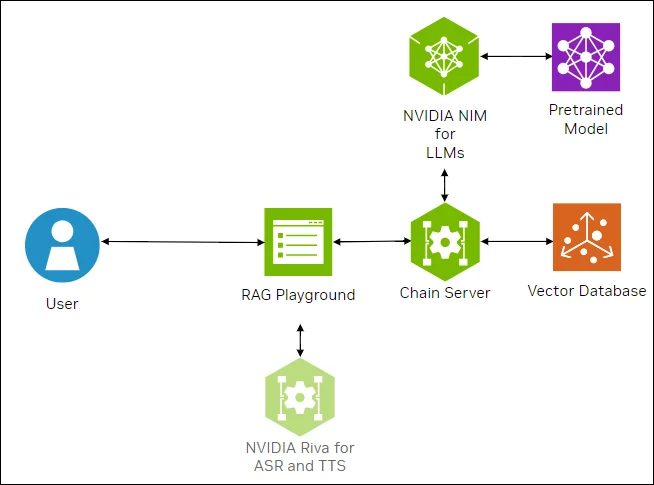
NVIDIA's Inference Microservice (NIM) is being integrated into an open-source project, 'FuzzPilot', which uses large language models (LLMs) to guide fuzzing efforts. The project aims to achieve "off-hot-path LLM control" for fuzzing tools like AFL++. Researchers are seeking additional "RPM" – a likely reference to computational resources or capacity – to facilitate evaluations detailed in an upcoming paper.
The core of FuzzPilot's approach is to prevent the LLM from directly impacting the high-frequency mutation process within AFL++, instead guiding it through "recipe-guided mutation and micro-campaign validation." This separation is intended to maintain the efficiency of the fuzzing process while leveraging LLM intelligence. The paper's current evaluation plan involves "11 runs × 4 h wall-clock," with four parallel AFL++ campaigns per experiment.

The project is available on GitHub under an open-source license, and its authors are preparing a paper targeting software engineering venues like ISSTA, FSE, or TSE. For replication and testing, the reference configuration uses meta/llama-4-maverick-17b-128e-instruct, with openai/gpt-oss-120b noted as a fallback. A key consideration for researchers is the avoidance of per-token billing, allowing them to use their own NVIDIA NIM accounts without incurring surprise costs.
Read More: Chrome mimeHandler API lets extensions handle file types
NIM's Role in LLM Deployment
NVIDIA NIM is presented as a containerized solution designed to streamline LLM deployment. It automates the optimization process for running LLMs on NVIDIA GPUs, abstracting away much of the complexity typically involved. The service offers an OpenAI-compatible REST API, enabling integration with various applications.
Key features of NIM, as demonstrated by NVIDIA's AI Blueprints, include:
Deployment of models directly from Hugging Face Hub or local storage.
Support for multiple inference backends, such as TensorRT-LLM for high performance and vLLM for versatile deployment.
Customizable deployment parameters and an OpenAI-compatible API.
To utilize NIM, users generally require Docker with the NVIDIA Container Runtime, an NVIDIA GPU with compute capability 7.0 or higher, sufficient system memory (16GB+ recommended), and appropriate NVIDIA drivers. Authentication involves using an NGC API key for pulling NIM containers from the NVIDIA Container Registry (NGC) and, optionally, a Hugging Face token for model downloads.
Read More: Why Manual Prompt Editing Is Better For AI Apps In April 2026
The NIM service provides endpoints for health checks (GET /v1/health/ready), completions (POST /v1/completions), and chat completions (POST /v1/chat/completions). Configuration often involves environment variables like NGC_API_KEY and volume mounts for model caching (-v "$LOCAL_NIM_CACHE:/opt/nim/.cache"). Common deployment issues, such as GPU errors or credential problems, are often linked to the NVIDIA Container Toolkit setup or incorrect API key formats.
Broader LLM Platform Landscape
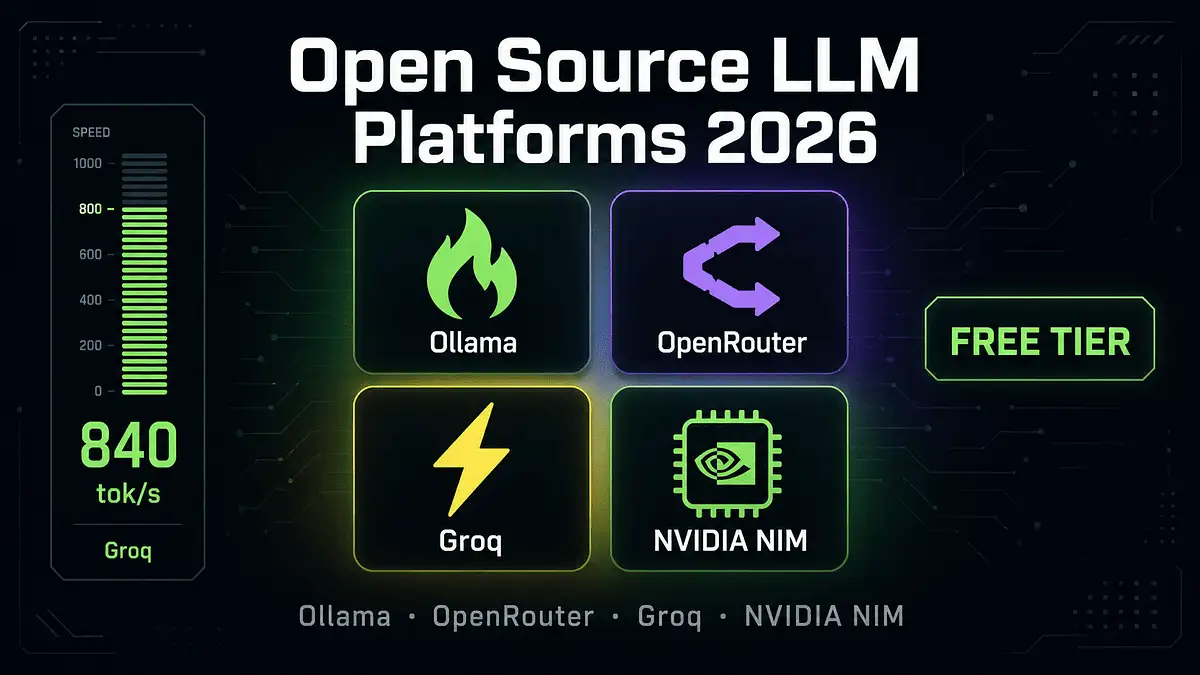
The integration of NIM into FuzzPilot occurs within a broader context where open-source LLM platforms are rapidly maturing. Platforms like Ollama, OpenRouter, and Groq, alongside NVIDIA NIM, are providing accessible ways to interact with increasingly capable open-source models. This evolution has moved the focus from the technical hurdles of LLM deployment to the selection of the most suitable platform for specific needs, whether for local self-hosting or cloud-based API access with free tiers. The current availability of powerful open-source models and user-friendly platforms suggests a shift away from the complex server provisioning and dependency management that characterized LLM usage just a couple of years ago.
Read More: BEREC Asks for Mobile Network API Ideas from Developers