Mass Returns Documented as Government Policy Unfolds
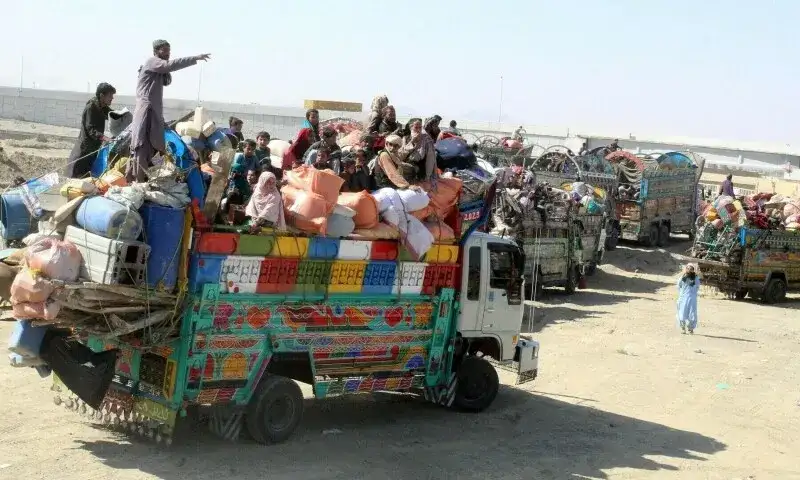
Between September 15, 2023, and May 16, 2026, Pakistan saw the departure of over 2.39 million individuals to Afghanistan. This significant exodus follows a series of measures enacted by the Pakistani government, including the "Illegal Foreigners' Repatriation Plan" (IFRP), which targeted undocumented Afghan nationals, holders of Afghan Citizen Cards (ACC), and later, those with Proof of Registration (PoR) cards as they expired. The data, compiled by the United Nations High Commissioner for Refugees (UNHCR) and the International Organization for Migration (IOM), tracks arrests, detentions, and cross-border movements through key crossing points like Torkham, Ghulam Khan, Chaman, Badini, and Bahramcha.
Continued Departures and Detention Activity Observed
In the week spanning May 10 to May 16, 2026, an estimated 41,672 Afghan nationals returned to Afghanistan. During this same period, reports indicate continued arrests and detentions, particularly concentrated in the provinces of Balochistan, Khyber Pakhtunkhwa, Punjab, and the Islamabad Capital Territory (ICT). These figures reflect an ongoing dynamic of enforced returns and the government's sustained application of repatriation policies.
Read More: Deportees trapped in Venezuela earthquake after June 24 flight
Provincial Breakdown of Returnees
A 2025 report noted that most returnees originated from Punjab (28%), Balochistan (24%), Sindh (21%), and Khyber Pakhtunkhwa (20%), with smaller numbers from other regions, including the ICT. The International Organization for Migration (IOM) stated that 54 percent of those accounted for were forcibly returned, underscoring the coercive nature of the repatriation efforts.
Background to the Repatriation Plan
The government's "Illegal Foreigners' Repatriation Plan" was formally initiated following a decision by the Ministry of Interior on September 26, 2023. The plan saw a phased implementation, initially focusing on undocumented individuals and ACC holders, before extending to PoR card holders. This initiative represents a significant shift in Pakistan's approach to its Afghan refugee population, which has historically been one of the largest globally. The UNHCR and IOM have consolidated their data to monitor the "evolving protection environment and cross-border movements" resulting from these governmental directives.
Read More: 40 Die in Quetta to Peshawar Bus Crash in Balochistan on April 3 2026