Nano-Scale Transformation Yields Cleaner Effluent
Researchers at the National University of Singapore (NUS) have engineered a new method to clean tainted water, repurposing something typically discarded: pomegranate peel. This initiative has yielded a material, processed down to the nanoscale, capable of filtering out over 94 percent of a specific toxic industrial pollutant.
The development hinges on what the researchers describe as a straightforward production process. By reducing the peel to its nanoscale dimensions, more surface areas become exposed, thus increasing reactivity. This finer structure facilitates a swifter, more effective binding with molecules of the pollutant, identified as 4-nitrophenol (4-NP).
The core of the breakthrough lies in transforming a common waste product into a functional purification agent. This approach sidesteps the need for harsh chemicals in the purification process itself.
Durability and Future Steps
Early assessments suggest the resultant material can be used repeatedly, pointing towards potential economic viability. However, significant hurdles remain before this lab-scale success translates to widespread application.
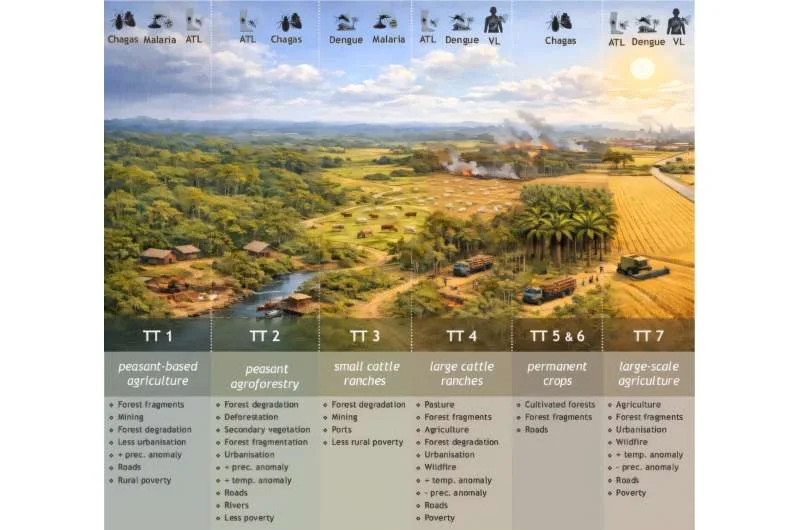
Read More: Amazon Land Use Changes Cause Disease Clusters in Brazil
The scaling up of production processes is identified as a critical next stage.
Further work is needed to integrate this new material into established water treatment infrastructure.
The findings were published recently, with multiple outlets reporting on the development on May 26, 2026.