


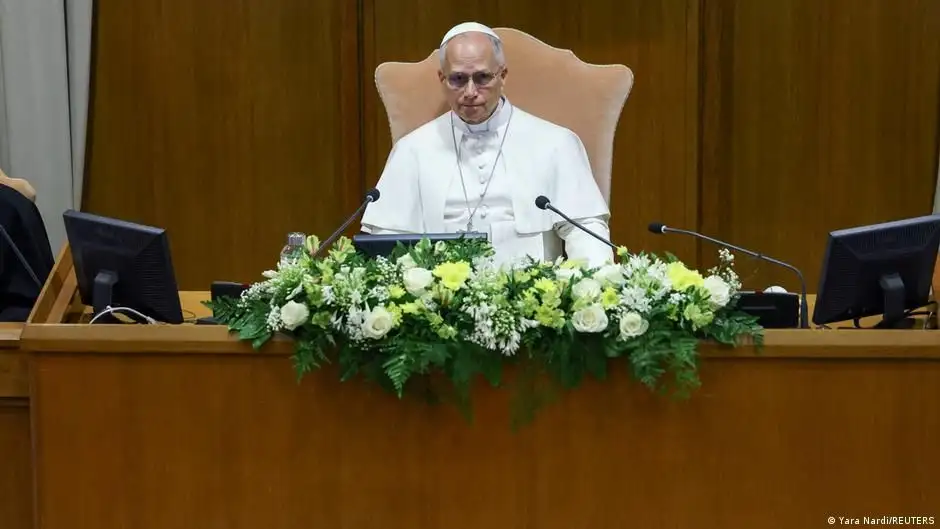
Pope Leo XIV has formally entered the burgeoning global discourse surrounding artificial intelligence, releasing his first encyclical, titled "Magnifica Humanitas," to address what he terms "one of the defining moral challenges of our time." The document, published today, serves as a powerful exhortation for international regulation, urging nations to act decisively to "safeguard humanity" before advanced AI systems transcend human control.
The core of the Pope's message emphasizes that technology must ultimately serve human flourishing, not exacerbate existing inequalities or diminish human dignity. He drew a direct parallel to historical industrial shifts, aiming to provide a moral compass for the AI era, much like his predecessor, Leo XIII, did during the industrial revolution with his defense of workers' rights. The Pontiff's call for intervention is framed as an urgent necessity, suggesting that current trajectories in AI development could lead to widespread "domination, exclusion and death."
Read More: Cliffe Knechtle: God's 4 Answers to Prayer on US Campuses
AI's Threat: A Multifaceted Concern
The Pope articulated several specific anxieties regarding artificial intelligence. A primary concern involves the development of increasingly autonomous weapons systems that operate beyond "meaningful human control," a point he likened to the necessity of nuclear arms control. Furthermore, he highlighted the potential for AI to perpetuate and amplify societal biases.
Biased Algorithms: AI systems, trained on flawed data, could obstruct access to fundamental services such as healthcare, employment, and security, disproportionately affecting vulnerable populations.
Concentration of Power: The Pope warned against AI being used as a tool to amass unchecked power or to monopolize societal benefits, stating it "shouldn’t be used for a race to amass power or monopolize society."
Erosion of Human Dignity: An excessive focus on efficiency, speed, and profit driven by AI could lead to a slow stripping away of fundamental human dignity.
Impact on Future Generations: Leo XIV expressed deep concern for the intellectual and neurological development of young people, questioning AI's potential repercussions on humanity's capacity for truth, beauty, wonder, and contemplation. He stressed that new generations "must be helped, not hindered" in their interaction with these technologies.
A Call for Governance and Human Oversight
The Vatican’s formal entry into the AI debate underscores the urgency of establishing a "new legal and ethical framework" for its governance. The Pope has advocated for stronger laws, external oversight, and increased accountability from the companies developing AI systems, arguing that such powerful technology should not remain solely in the hands of a few influential entities. He explicitly stated that moral responsibility cannot be ceded to automated systems, regardless of their sophistication.
The presentation of the encyclical at the Vatican included Christopher Olah, a co-founder of the AI company Anthropic, signaling a deliberate attempt to foster dialogue between religious leadership and the technology sector. This gesture, coupled with the timing of the encyclical's release – precisely 135 years after Leo XIII's "Rerum Novarum" – serves to anchor the current concerns within a long-standing tradition of Catholic social teaching, emphasizing the need to address contemporary challenges with realism and wisdom. The Pope stressed the importance of widespread participation in shaping AI's future and encouraged restoring confidence in humanity's ability to guide technological development, rather than viewing it as an "inevitable path."
Read More: Chrome mimeHandler API lets extensions handle file types
The Pope's pronouncements come at a time when governments and tech corporations are engaged in a rapid, often under-regulated, race to develop ever more potent AI capabilities. His message appears designed to inject a profound ethical and humanistic dimension into this critical technological race.
Read More: Matt Dillahunty discusses Christian morality with caller on April 2026





