


Vatican’s Foundational Text Links Artificial Intelligence to Human Hubris, Demands Oversight
Pope Leo XIV has issued a weighty declaration, his first major papal text, flagging significant worries regarding the ascendant power of artificial intelligence (AI). This encyclical, a profoundly authoritative teaching document, draws parallels to historical attempts at reaching the heavens, implicitly referencing the biblical Tower of Babel. The Pontiff’s message, formally signed on May 15th, aims to spur calls for more stringent regulation of AI technologies. The Vatican asserts that the unchecked advancement of AI mirrors humanity's historical pursuit of godlike power, risking societal fragmentation and moral disorientation.

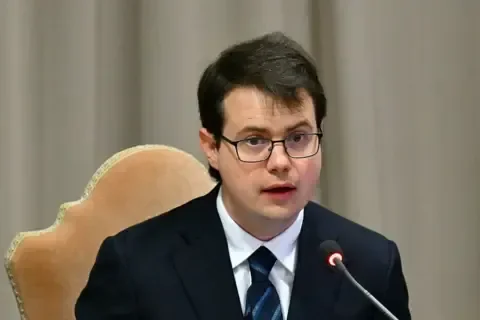
The Pope's move positions this encyclical as a foundational text of modern Catholic social teaching, a significance he himself underscored. In a gesture of engagement, Leo XIV presented the document alongside Christopher Olah, a co-founder of Anthropic, an AI firm. This meeting signals an overt effort at dialogue between religious authority and the AI industry. "When some objected that the Church should not waste energy on worldly matters, but instead focus on communicating the message of eternal life," the Pope stated, echoing past papal realism, "Leo XIII responded with realism and wisdom, saying that the proclamation of the Gospel cannot overlook the concrete lives of people." Leo XIV expressed his intent to "add my own voice to this living tradition."
Read More: Cliffe Knechtle: God's 4 Answers to Prayer on US Campuses

AI's "Culture of Power" and Political Distortions Under Scrutiny
The Pontiff directly decried a ‘culture of power’ he sees as fueling AI’s proliferation. The Catholic Church, Leo XIV stated on Monday, intends to collaborate with AI developers to ensure the technology’s proper deployment. Olah, in turn, echoed this sentiment, arguing that AI's trajectory should not be solely dictated by tech companies. He called for broader oversight from religious bodies, governments, and civil society.
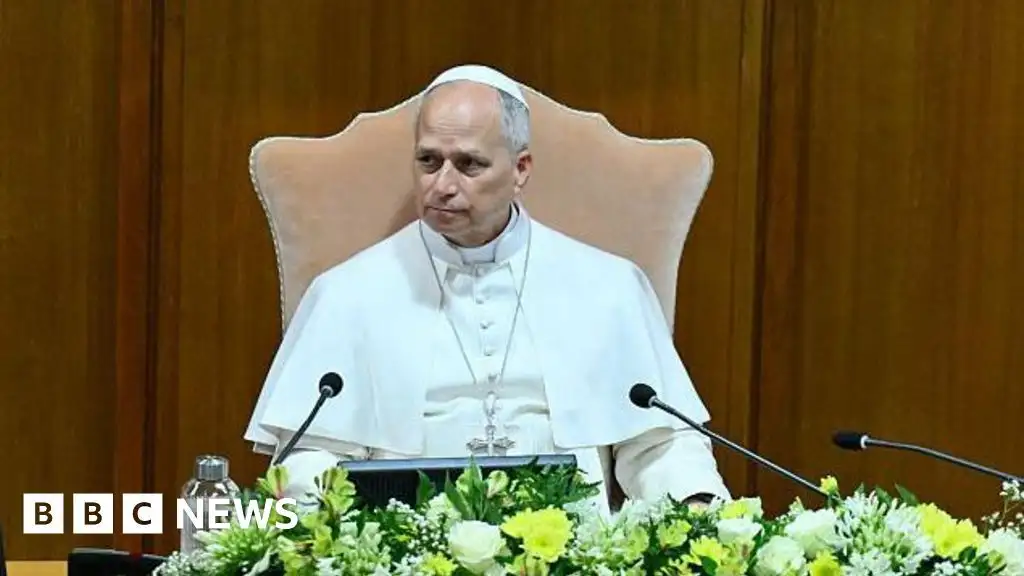
The encyclical specifically targets AI’s application in warfare, urging its 'disarmament'. Furthermore, Leo XIV illuminated AI’s disruptive role in politics, condemning its use for manipulating images and videos, thereby exposing individuals to skewed or deceitful perspectives. While encyclicals are formally addressed to bishops, recent papal missives have evolved into global pronouncements. Leo XIV has established a commission to advance his agenda, though questions persist about its efficacy against the backdrop of rapid technological shifts.
Read More: Chrome mimeHandler API lets extensions handle file types
Historical Parallels and Vatican's Engagement
The timing of the encyclical, issued precisely 135 years after Leo XIII's landmark text 'Rerum Novarum', highlights a deliberate connection to historical social justice pronouncements. Leo XIV’s initial concerns about AI as a major threat to humanity, voiced shortly after his election in May last year, are now formally documented.
The Vatican has maintained a sustained engagement with AI issues for several years, engaging in regular discussions with major technology firms like Microsoft and Google. In a notable departure from tradition, Leo XIV personally presented this encyclical at the Vatican, a public display emphasizing its importance. The document also includes what is described as one of the Catholic Church’s strongest apologies for its historical involvement in slavery.





