The Supreme Court on Tuesday greenlit the Election Commission's (EC) Special Intensive Revision (SIR) exercise, ruling it a legitimate and constitutional undertaking for maintaining accurate electoral rolls. The apex court found no inherent flaws in the SIR process and stated that its provisions are reasonable, rejecting arguments that the exercise was an illegal overreach.

The court's judgment, delivered on May 27, 2026, addresses a batch of petitions that challenged the constitutionality of the SIR, particularly after its initial phase in Bihar. Petitioners, including the NGO Association for Democratic Reforms (ADR), had argued that the EC lacked the necessary constitutional and statutory authority for such a large-scale revision. The EC, however, maintained that ensuring only eligible citizens are on the voter list is a constitutional duty and that the SIR's powers stem from Article 326, which limits voting rights to Indian citizens.
Read More: Supreme Court May Order Ayodhya Temple Fund Audit Due to Theft Claims
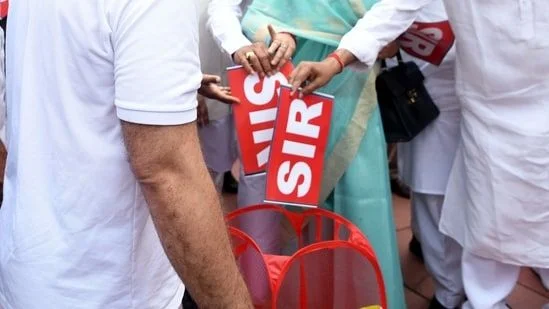
The Supreme Court clarified that the EC does not determine citizenship, but rather its role is to ensure the integrity of electoral rolls. The SIR was deemed a distinct but valid process compared to ordinary voter list revisions. The court's decision on the Bihar SIR is set to apply with equal rigor to similar SIR exercises conducted nationwide.

The court stated, "The SIR exercise cannot be struck down as ultra vires (illegal) just because it’s a process different from the ordinary exercise of revision of voter rolls."
The hearings saw the Supreme Court actively engaging with the process, even intervening to advocate for greater inclusivity in the massive voter list verification. The second phase of the SIR, covering 51 crore voters across 12 states and union territories, commenced while the Bihar challenge was still pending.
The SIR has been a point of contention, particularly after it led to the removal of over 60 lakh voters in Bihar and 90 lakh in West Bengal. Political parties have engaged in significant debate over the exercise. The Election Commission had previously defended the SIR as a constitutionally mandated verification process.
Read More: India IVF Costs And Social Barriers Limit Access In April 2026
The case was heard by a bench including Justices Surya Kant and Joymalya Bagchi, who had previously issued interim orders, such as treating Aadhaar as a supporting document for inclusion or exclusion from voter lists. The court had reserved its judgment on January 29, 2026, after extensive arguments from both the petitioners and the poll panel.