Donald Trump is reportedly asserting that any agreement aimed at resolving the ongoing conflict with Iran must include a mandate for several nations to join the 'Abraham Accords'. These U.S.-brokered agreements, established during Trump's prior term, foster normalized relations between Israel and several Arab states. The former president explicitly stated during recent negotiations that countries such as Saudi Arabia, Turkey, Egypt, Jordan, Qatar, and Pakistan should simultaneously commit to these accords. Trump even posited that Iran itself could eventually become a signatory, a notion met with considerable skepticism given the long-standing animosity between Tehran and Jerusalem.
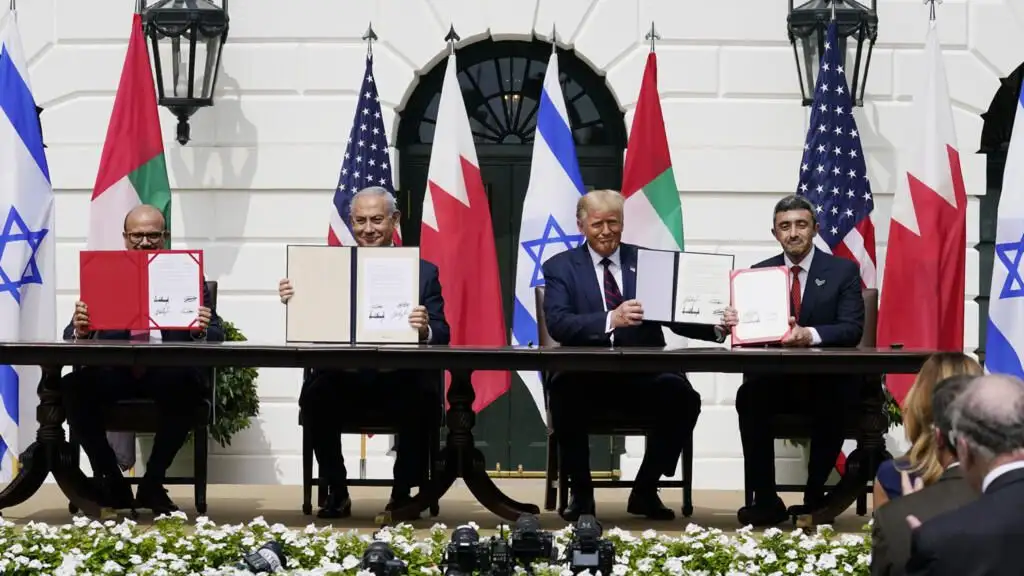
Trump articulated this demand on Monday, framing it as a critical component for any Iran deal that he described as "proceeding nicely." He indicated that negotiators had been instructed to begin the process of bringing these countries into the existing Abraham Accords framework. While some existing members like the UAE and Bahrain were noted, the emphasis was on expanding the bloc significantly. The proposal, according to Trump, is intended to create a more unified, powerful, and economically robust Middle East.
Read More: Trump's May 26 Walter Reed Visit Raises Health Transparency Questions

Accords Expansion and Regional Reactions
The proposal’s inclusion of countries like Saudi Arabia and Pakistan, which have historically maintained more reserved stances toward Israel, faces considerable headwinds. Pakistan, through its former ambassador to the United States, Masood Khan, has indicated that the workability of such a proposal remains to be seen. Reports from Saudi Arabia suggest that any normalization would hinge on an "irreversible pathway" toward a Palestinian state, a condition not directly addressed by Trump’s current demands. Analysts like Syed Mohammad Ali have stated that Pakistan's official position on Israel has not shifted in light of Trump's recent overtures.

Trump acknowledged that one or two countries might have justifiable reasons for not signing, but stressed that the majority should be ready to commit to make the settlement with Iran "a far more Historic Event." He also suggested that these countries join the accords as a condition for being part of the broader Iran deal.
Read More: Iran Strait of Hormuz Opening Linked to Peace Deal Ratification
Background to the Abraham Accords and Iran Negotiations
The Abraham Accords were initiated during Trump's presidency, leading to normalization agreements between Israel and the United Arab Emirates, Bahrain, Sudan, and Morocco. This push for broader regional normalization has been a consistent theme in Trump's foreign policy approach. The current context involves ongoing negotiations to de-escalate tensions and potentially reach a peace agreement with Iran, particularly in light of recent escalations, including strikes and the closure of the Strait of Hormuz. Trump’s insistence on linking the Iran negotiations to the expansion of the Abraham Accords appears to be an attempt to secure a perceived diplomatic victory for Israel within any Iran-related settlement. Israel itself has not publicly commented on Trump's specific suggestion regarding the accords.