Ancient Impact Theory Reshapes Understanding of Mercurian Water
New scientific modeling suggests that Mercury's polar water ice may not be the result of gradual accretion from comets or asteroids over eons, but rather a consequence of a single, monumental impact event. This hypothesis posits that a larger, slower-moving celestial body, striking the planet within a day, could have delivered the vast quantities of water now found frozen at Mercury's poles.
The core of this revised theory hinges on the formation of the 97-kilometer-wide Hokusai crater. Researchers simulated the aftermath of such a colossal collision, comparing scenarios where water vapor disperses into Mercury's tenuous natural atmosphere versus its entrapment within a dense, temporary atmosphere generated by the impact itself.
A Fleeting, Water-Rich Atmosphere
The simulations reveal a dramatic outcome: within an hour of the impact, the released water vapor would rapidly expand, forming a temporary, planet-wide atmosphere. This "atmospheric self-shielding" effect is crucial. It suggests that this transient, dense atmosphere would have dramatically increased the survival rate of water vapor, allowing it to condense and deposit as ice in the planet's frigid polar regions. Planetary radar measurements confirm the presence of several-meter-thick ice layers, a volume that this single-impact model appears capable of explaining.
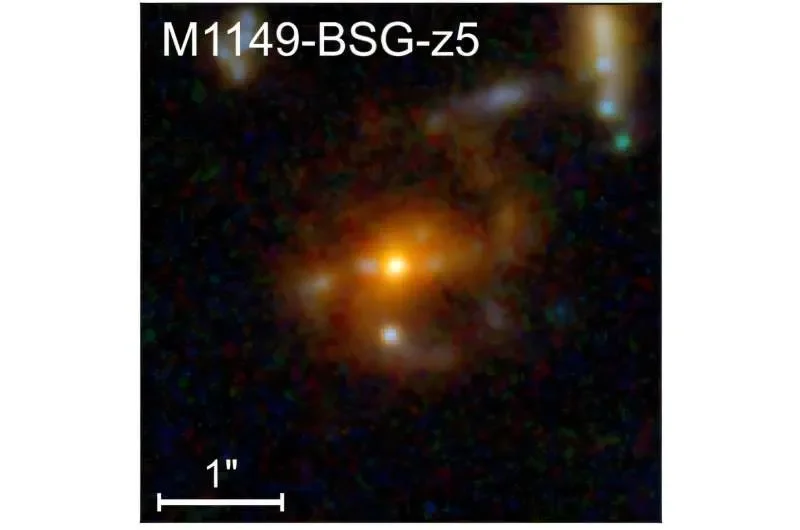
Read More: JWST Finds Oldest Barred Spiral Galaxy M1149-BSG-z5
JWST's Glimpse and Future Implications
The presence of water ice on Mercury, a planet known for its searing daytime temperatures reaching 427°C (800°F), has been a puzzle. Yet, the extreme cold in permanently shadowed craters allows ice to persist. Recent observations, including those aided by the James Webb Space Telescope (JWST), have lent credence to the existence of this ice. This discovery challenges long-held assumptions about Mercury's environment and formation. The confirmation of water ice on such an extreme world underscores the power of advanced observational tools like the JWST in refining our grasp of planetary science.
Rethinking Mercury's Past
This single-impact hypothesis offers a compelling alternative to the more accepted theories of water delivery via cometary or asteroidal bombardment over extended periods. It implies a much more dynamic and perhaps even volatile early history for Mercury than previously entertained. Further investigation into the mechanics of such impacts and atmospheric dynamics could fundamentally alter our understanding of how and when water became a component of even the solar system's most inhospitable planets.
Read More: US Space Force Victus Haze Mission Successfully Tests Orbital Intercepts