Astronomers detect peculiar star populations, hinting at a long-ago cosmic meal.
Researchers have pinpointed a distinct collection of stars within our own galaxy, the Milky Way, exhibiting properties that deviate from the norm. These stellar anomalies suggest they are the remnants of a much older, smaller galaxy that was absorbed by our larger galactic neighbor in the distant past. This finding offers a tangible glimpse into the Milky Way's violent, acquisitive history.
The identified stars are characterized by their orbital paths and chemical compositions. They trace patterns that do not align with the expected trajectories of stars born within the Milky Way itself. Instead, their movements and the elements detected within them point to an origin external to our galaxy's current structure.
This discovery supports the idea that galaxies are not static entities but rather grow and evolve through mergers and collisions. The Milky Way, like many galaxies, has likely gobbled up smaller galactic systems over billions of years, incorporating their stars and matter into its own sprawling expanse. The 'unusual' nature of these stars is precisely their foreignness – they are the leftovers of this ancient galactic feast.
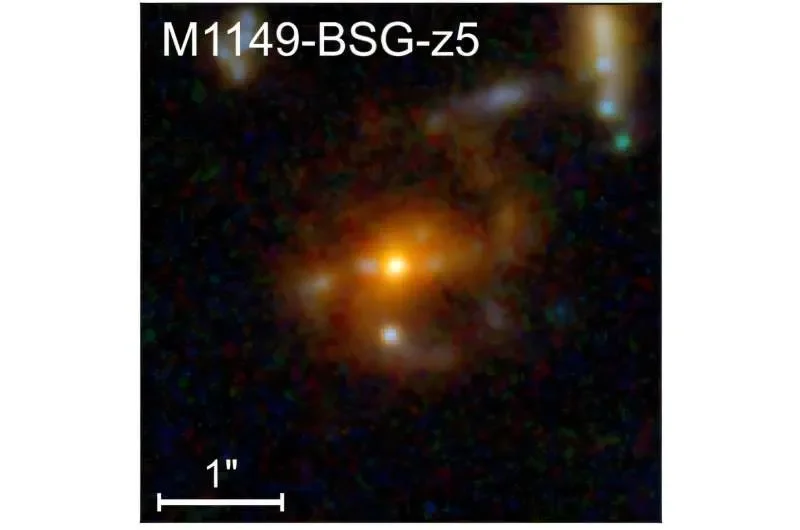
Read More: JWST Finds Oldest Barred Spiral Galaxy M1149-BSG-z5
The unusual nature of these stellar groupings has been a subject of ongoing observation. Previous studies have hinted at such phenomena, but this latest research offers a more concrete dataset and interpretation. The implications extend beyond a simple historical curiosity, providing valuable data for understanding galactic evolution and the forces that shape the cosmos.