Xiaomi has announced a substantial, permanent reduction in API prices for its large language models, with cuts reaching up to 99%. This move, effective globally as of May 27th, 00:00 Beijing time, places the company directly in competition with other major players in the AI space. The price adjustment primarily targets the MiMo-V2.5 series, including the standard and Pro versions.

Xiaomi's aggressive pricing strategy, particularly the permanent nature of the cuts and the significant percentage reduction, signals a potential escalation of competition in the AI model market, echoing past price wars seen in other tech sectors, such as cloud computing. This mirrors recent actions by DeepSeek, which also offered significant discounts, though its promotion was time-limited.
The price adjustments are attributed by Xiaomi to "technological dividends" and system optimizations. Specifically, the company cites improvements in its inference system architecture, including SWA Inference Optimization and full support for SGLang HiCache, which reportedly reduce data transfer volumes by up to seven times. Furthermore, the company has simplified its billing structure by removing tiered pricing based on context window length and introducing a 'Credits' system within its Token Plan. This upgrade increases the usable token quota by five to eight times the original amount without additional charges.
Read More: SoftBank to Offer AI Cloud Services in Japan
The price war now involves prominent entities such as Alibaba's Tongyi Qianwen, Baidu's Ernie Bot, and Tencent's Hunyuan models, all of which have been expanding their large language model offerings. Analysts suggest that sustained price reductions could significantly alter the competitive landscape, potentially boosting adoption of Xiaomi's AI services across its vast smartphone and IoT ecosystem, though the immediate impact on profit margins remains unclear. Usage data has already shown shifts, with MiMo-V2.5-Pro token consumption on OpenRouter surging by 111% following the announcement.
Read More: Australian Entrepreneurs May Move Business Overseas Due To Tax Changes
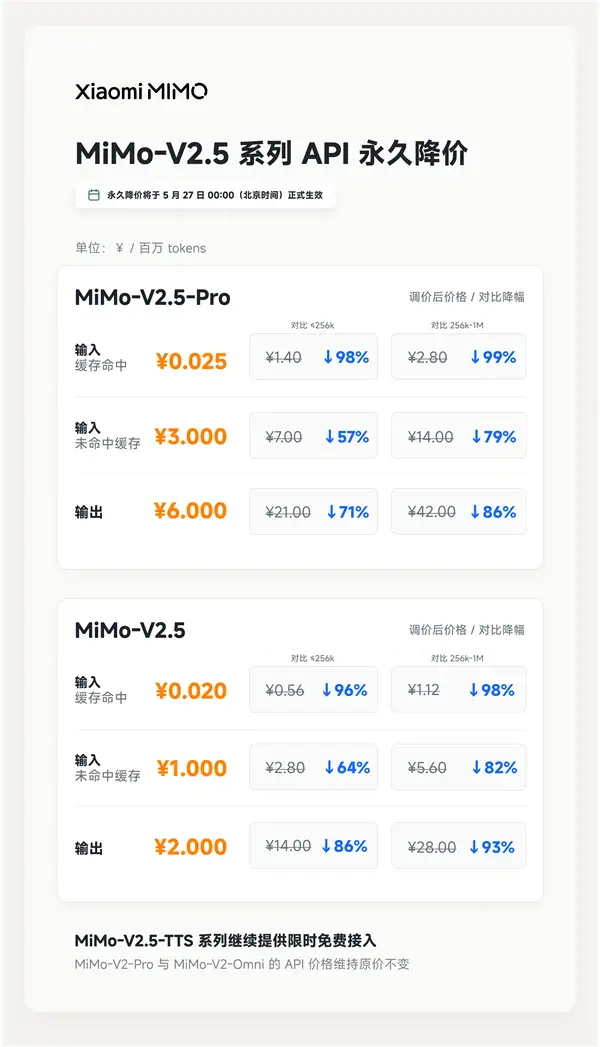
Xiaomi’s previous ventures into large models include the March launch of three basic models: MiMo-V2-Pro, MiMo-V2-Omni, and MiMo-V2-TTS. While the two high-end models, MiMo-V2-Pro and MiMo-V2-Omni, had their API prices unchanged, the focus of this latest adjustment is the core MiMo-V2.5 series. The company has not disclosed expected revenue impacts or the current number of enterprise clients for its MiMo models.
This market dynamic occurs against a backdrop of broader trends in AI, including increased focus on inference efficiency, the rise of specialized hardware, and the concept of 'Sovereign AI' where data and AI capabilities are kept within national borders. The push for more processing-intensive models continues, even as competition drives down costs for accessing state-of-the-art AI.
Read More: 90% of APIs Unsafe for AI Agents, Warns Security Expert